
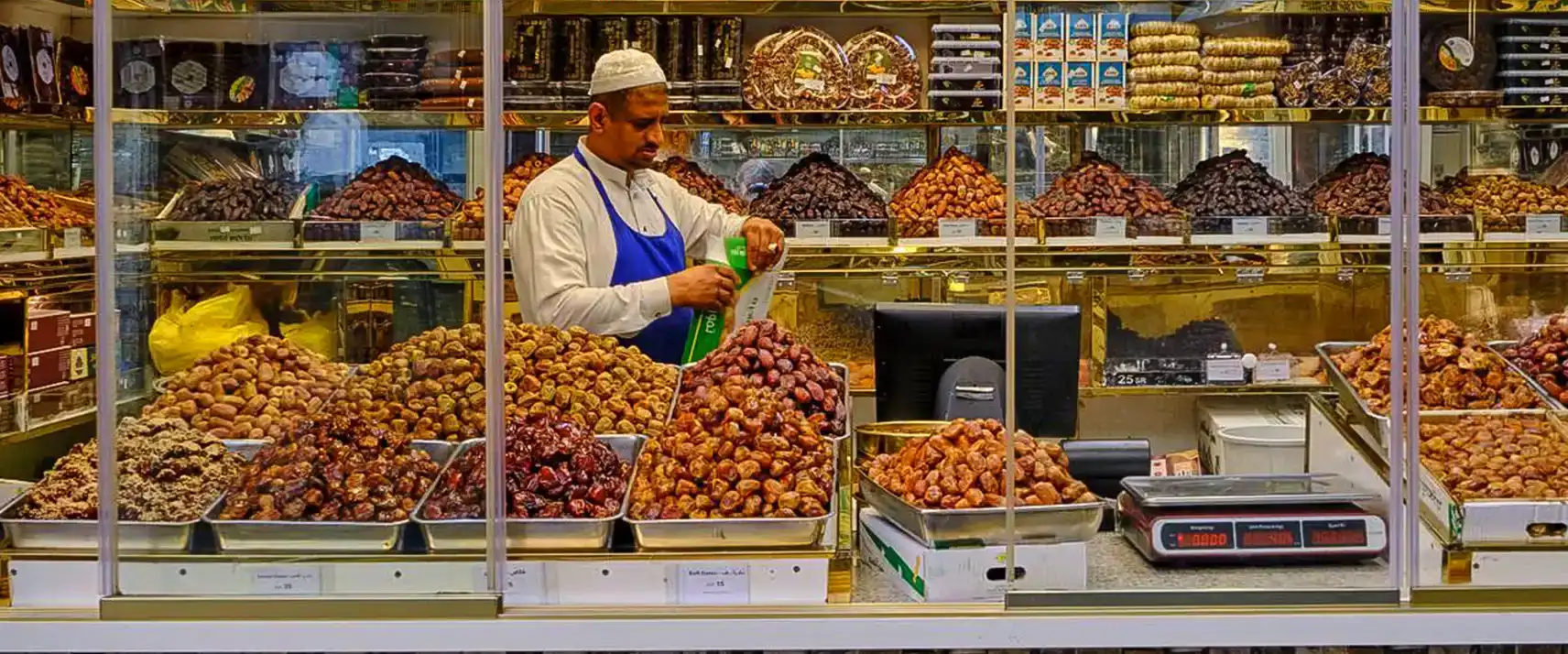
The Abu Dhabi Dates Market, in the Mina Zayed port area, is where the city buys its dates. Rows of shops are stacked with dozens of varieties, from amber Khalas to rich Medjool, alongside nuts, dried fruit and traditional sweets. Vendors hand out samples, sometimes with Arabic coffee, so you can taste before you buy. After the grandeur of the mosque and palaces, it’s a down-to-earth look at one of the UAE’s oldest food traditions.
Dates in Emirati Culture
“For centuries, dates were a staple food across the Arabian Peninsula: nutritious, easy to store, and able to last through the long desert summers. The date palm also gave shade, building material and fuel, which made it central to life in the oases.
Dates are still the heart of Emirati hospitality. Guests are traditionally welcomed with dates and gahwa, Arabic coffee, and during Ramadan, dates are eaten to break the fast. The knowledge and traditions of date palm cultivation are recognised by UNESCO as part of the region’s shared cultural heritage.”
Your Visit Step by Step
A visit to the Dates Market is short, relaxed and very hands-on. Here’s how it usually goes.
1. Arrival at Mina Zayed
We bring you to the market in the Mina Zayed port area, where shopfronts are stacked high with boxes of dates, nuts and dried fruit.
2. Exploring the Stalls
Wander at your own pace and compare varieties, from soft, caramel-like dates to firmer, drier types that keep for months. Prices vary between shops, so it pays to look around.
3. Tasting
Most vendors offer samples, and some serve Arabic coffee alongside. Try a few varieties side by side; it’s the easiest way to find your favourite.
4. Buying and Packing
Agree the price, often by the kilo, then ask the vendor to box your dates for travel. Gift boxes, stuffed dates and chocolate-coated dates make easy, well-loved presents.
A Quick Guide to Popular Date Varieties
With dozens of varieties on sale, it helps to know a few names before you start tasting. These are the ones you’ll see most often.
Khalas
The variety Emiratis buy most, and a classic gift. Amber-coloured, soft and caramel-sweet.
Medjool
Large, soft and rich, with a toffee-like flavour. A favourite with visitors.
Ajwa
Small, dark and soft, from Madinah in Saudi Arabia. Ajwa dates are prized and often carry a higher price.
Sukkari
Golden, soft and very sweet, as its name, from the Arabic for sugar, suggests.
Stuffed and Coated Dates
Dates filled with almonds, pistachios or orange peel, or coated in chocolate, are the most popular gifts of all.
Taking Dates Home
Dates are one of the best edible souvenirs you can bring back from the UAE, but customs rules differ between countries.
- Choose sealed, commercially packed and labelled boxes for flights
- Check your destination country’s customs rules before you buy
- Declare food where your country requires it; Australia, for example, treats dates as a biosecurity risk that must be declared
- Fresh rutab dates don’t travel well; buy dried dates for gifts
What’s Included
- Return hotel transfers from Dubai / Abu Dhabi,
- Guide, if included
- Free time to browse, taste and shop at the Dates Market
- Help choosing varieties and gift packs
What to Wear and Bring
- Comfortable, casual clothing
- Some cash for smaller stalls (many larger shops take cards)
- Space in your luggage, or a bag, for your purchases
- Water, if you’re visiting in the warmer months”
Who This Tour Is For
Food lovers, souvenir shoppers and anyone curious about everyday Emirati life. It’s a welcome change of pace between Abu Dhabi’s bigger landmarks, and a better place for gifts than the usual tourist shops.
Good to Know
- A short stop: 30 to 45 minutes is usually enough
- Bargaining is normal at many stalls
- Bring some cash; many larger shops also take cards
- Busiest in the evening and during Ramadan
- Check your home country’s customs rules before buying dates to take home
- Pairs well with Heritage Village’s souk and the Corniche on an Abu Dhabi day
Dates Market Packages
Visit the Dates Market as part of a full day in Abu Dhabi, or combine it with Heritage Village for a half day of markets and traditional culture.
